

How to Choose the Right Muffler
What Does a Muffler Do?
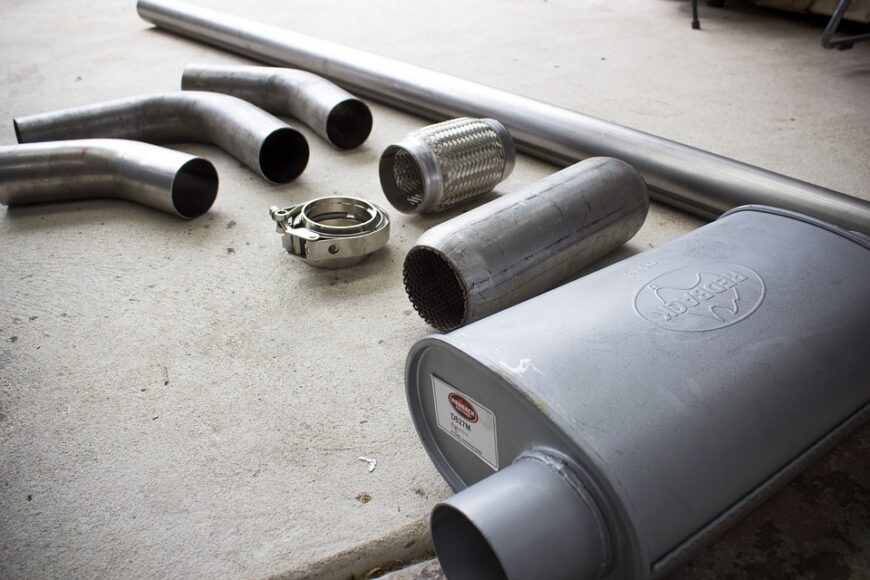
The muffler is a key part of your vehicle’s exhaust system, responsible for reducing engine noise and managing exhaust flow. It’s a cylindrical or oval-shaped component attached to the exhaust pipe that filters and redirects the loud, explosive sounds produced by engine combustion.
Inside every muffler is a network of tubes, chambers, and perforations specifically engineered to reflect and cancel out sound waves, reducing overall noise levels while maintaining proper exhaust backpressure.
Modern mufflers also help improve emissions and fuel efficiency by optimizing how exhaust gases exit the system.
Factory vs. Custom Mufflers
All vehicles come with a factory-installed muffler, which is designed for quiet operation and compliance with emissions standards. However, installing an aftermarket custom muffler can significantly improve your vehicle’s sound, performance, and style.
While stock mufflers “get the job done,” custom mufflers are built to enhance performance, horsepower, and exhaust tone—ideal for enthusiasts who want their vehicle to stand out.
Before installing a new muffler, there are three critical factors to consider: fit, type, and construction.
1. Find the Right Fit
When it comes to fit, you need to consider whether or not your vehicle has a single or dual exhaust system. To check, look under the rear of your vehicle:
- One tailpipe = Single exhaust system
- Two tailpipes = Dual exhaust system
Whether you have a single or dual system will indicate how many inlets are required. The inlets are sections of the exhaust tip that point toward your engine.
You also need to know your exhaust pipe diameter in order to match the inlet size to the existing diameter.
Lastly, take note of how much room you have under your vehicle for a custom muffler. You want to make sure that whatever custom muffler you choose provides sufficient clearance under your vehicle. Book a exhaust inspection to confirm your fit before buying.
2. Types of Mufflers
Once you have figured out the proper fit of a custom muffler, you need to choose the style of muffler. There are 3 main styles to choose from, each with their own benefits and considerations:
Straight Through Muffler
A straight-through muffler uses a perforated core surrounded by sound-absorbing material. This design allows exhaust gases to flow freely, minimizing restriction and improving horsepower and throttle response. Because of this efficiency, you may also notice a small boost in fuel economy.
Downside: Louder exhaust tone—great for performance cars, less ideal for daily commuters.
Turbo Muffler
Turbo mufflers have an S-shaped design that allows exhaust gases to enter the muffler and release out the tube. While you will gain horsepower and better noise reduction, this muffler design is more restrictive. This means that the exhaust gases have to travel farther and work harder to push through the exhaust system.
Chambered Muffler
If you are looking for that deep and growling engine noise, you may want to consider a chambered muffler. The resonating chambers inside this muffler are designed to amplify and tune the exhaust sound into something more guttural and aggressive. Chambered mufflers also provide low restriction and more engine “breathability”. These mufflers are popular among drivers who want both performance and personality.
3. Muffler Construction
While mufflers come in all shapes and sizes, they can be made of different materials as well.
Typically, factory standard mufflers are made of aluminized steel. This is merely a cost-efficient option that involves hot-dipping standard-grade steel to coat it with a tough, corrosion-resistant alloy. Stainless steel, on the other hand, is made from a denser steel and provides stronger corrosion-resistance, more durability and a longer life span. It also costs quite a bit more.
Neither aluminized steel or stainless steel necessarily lend to performance. When choosing between the two, consider where you live and the weather conditions there. Climates that experience wetter weather and salted roads in the winter may accelerate the development of rust in aluminized steel. For these areas, stainless steel may be more appropriate and cost-efficient.
Contact us today about your custom muffler options!
–
Written: June 15, 2019 | Last Updated: November 5, 2025 | By Park Muffler
Proudly Canadian owned and operated

© Park Muffler - All Rights Reserved.