

- November 5, 2025
- By Park Muffler
- In Blog
Google Rating
Based on 1833 reviews
Rear Differential Problems? What Edmonton Drivers Should Know
Quick Summary
- Your rear differential helps power your wheels at different speeds when turning.
- A bad rear differential can cause noise, vibration, poor handling, or drivetrain damage.
- Common types include open, limited-slip, locking, and torque-vectoring differentials.
- Watch for symptoms like whining, grinding, or fluid leaks—and don’t delay repairs.
Why Your Rear Differential Matters
Your rear differential is one of those components you don’t think about—until something goes wrong. It helps your vehicle turn smoothly by allowing the wheels to rotate at different speeds, especially around corners.
For drivers in Edmonton and Sherwood Park, this matters even more. Harsh winters, icy roads, and sharp turns put more pressure on your drivetrain. If your differential starts to fail, you might notice noises, handling issues, or even find yourself stuck.
When one wheel is spinning slower on a curb, for example, the rear differential will keep driving the other wheel and prevent skidding, binding, or jerking. Without a differential, the wheels would lock together at the same speed during a turn and increase the likelihood of losing control.
Other than turning, not having a rear differential could cause issues with the drivetrain being exposed to high forces, causing one tire to grab and slip in order to maintain the same speed as the other tire. This puts a huge strain on axle components and can lead to premature tire wear.
Types of Rear Differentials
There are four main types of differentials used in vehicles today.
- Open Differential: The most common type. It allows each wheel to rotate at different speeds but may lose traction easily on slippery surfaces.
- Limited-Slip Differential (LSD): Acts like an open differential under normal driving but prevents wheel spin during hard acceleration or cornering. Common in performance cars.
- Locking Differential: Found in off-road and heavy-duty vehicles, this type locks both wheels together to send equal power for maximum traction in mud, snow, or uneven terrain.
- Torque-Vectoring Differential: The most advanced system. It uses electronic sensors and clutches to actively distribute torque based on throttle input, wheel speed, and road conditions for superior control.
Knowing which type your vehicle has helps your mechanic at determine the right maintenance or repair approach.
Symptoms of a Bad Rear Differential
If your rear differential starts to fail, you’ll notice warning signs long before it completely gives out.
Watch for these common symptoms:
- Difficulty in Handling: When your rear differential starts to wear out, you’ll notice a loss of precision when it comes to making turns.
- Tire Damage: Having your tires rotate at the same speed while taking corners will lead to premature wear on the inner tires or, worse, damage.
- Vibrations and Shaking: If the universal joints of the rear differential are significantly worn and torn, you’ll notice a vibration in the driveshaft – especially when you accelerate.
- Noises: The most common sign of a failing rear differential will be a whining noise due to a lack of lubrication of its internal components.
- Gear Grinding: Humming noises and gear grinding can also indicate an issue with your rear differential.
- Rattling While Idling: If you turn your vehicle on and put it into drive, you may rear a rattling noise coming from the rear of the vehicle. This could be a sign of a bad differential or driveshaft joint.
- Fluid Leaks: The rear differential and universal joints have seals and use lubricants to work properly. A leak or cracked seal may cause vibrations and failure of rear differential gears.
When rear differentials fail, it can cause vibration, noises, and fluid leaks. Ultimately, it can impact your vehicle’s handling and acceleration.
If you experience any of these issues, don’t wait—schedule a rear differential inspection immediately to avoid expensive drivetrain repairs.
What Causes Rear Differentials to Go Bad?
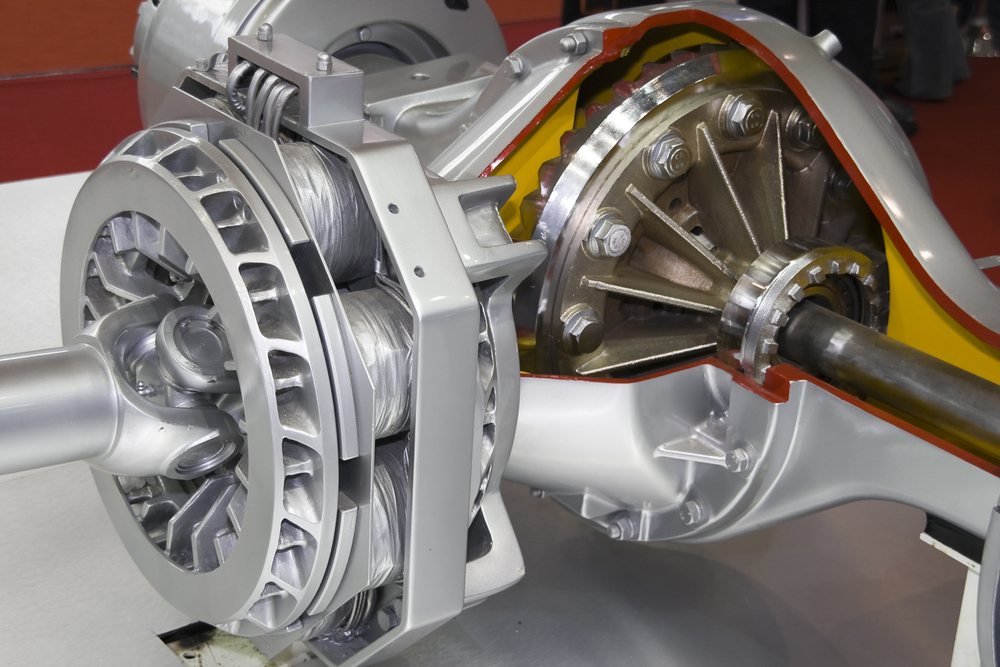
Abused or neglected rear differentials can go bad quickly, even in the first kilometers of a brand new vehicle.
Here are some specific reasons why a rear differential can go bad:
- Skipping the break-in period: New vehicles should only make short trips under 80 km/h for the first 4,800–8,000 km and shouldn’t tow or haul heavy loads during that time. The pedal should also be kept under half-throttle and the vehicle should not haul or tow anything during this time.
- Ignoring fluid changes: Differential oil should be replaced every 4,800–8,000 km after the break-in period to remove metal shavings and prevent overheating.
- Spinning your wheels: Aggressive driving or wheel-spinning on ice can overheat and damage the gears.
- Low or contaminated gear oil: Dirty or low differential fluid increases friction and leads to premature gear wear.
- Overloading the vehicle: Excessive towing or carrying heavy loads can strain the rear differential and bearings.
Differential failure is rare, especially if it is being maintained properly. However, issues with rear differentials usually do not happen suddenly and develop over time.
What Happens if Your Rear Differential Goes Out?
What happens after a rear differential goes out depends entirely upon the severity of the issue.
For example, broken gear teeth or chipped teeth can cause a skip in power or vibration that increases with speed. Depending on which teeth are damaged, you may experience constant vibrations or vibrations when turning.
Multiple broken teeth will cause a rattling sound that increases in severity. In this case, you should stop driving your vehicle and have it looked at right away.
Otherwise, you could lose control of your vehicle while driving – you may have difficulty making turns but your wheels can also lock up as well.
Repair Your Rear Differential Right Away!
Not only is driving with a damaged rear differential dangerous but, if you don’t have the issue addressed right away, it could snowball into more expensive repairs down the road.
Even though rear differentials can experience a wide range of issues, these problems are fairly easy to spot and repair when caught early on.
To prevent things from getting worse, have your vehicle brought in right away for repair! Our expert team at Park Muffler can diagnose rear differential damage as well as prompt and courteous service to ensure you and your vehicle are back on the road again!
–
Written: June 10, 2025 | Last Updated: November 5, 2025 | By Park Muffler
Proudly Canadian owned and operated
Sitemap | Privacy Policy | Terms of Service
© Park Muffler - All Rights Reserved.
© Park Muffler - All Rights Reserved.