

What are the Parts of Your Exhaust System?
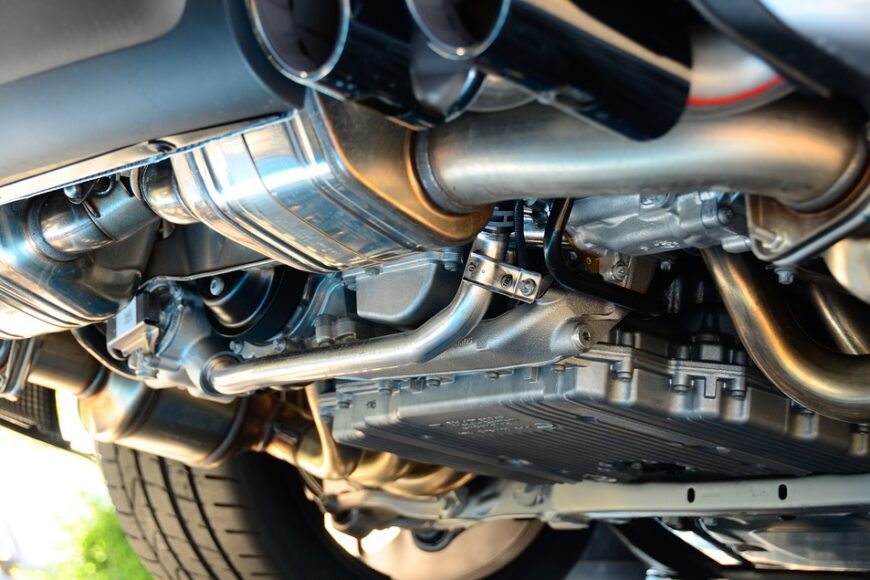
What Are the Main Parts of a Vehicle’s Exhaust System?
A vehicle’s exhaust system includes the exhaust manifold, oxygen sensors, catalytic converter, pipes, hangers and joints, muffler, and tailpipe. These components work together to move exhaust gases safely away from the engine and passenger cabin, reduce harmful emissions, and control engine noise. The system also provides information that helps the engine manage its air-fuel mixture efficiently. If one component becomes damaged or develops a leak, it can affect noise, emissions, performance, or passenger safety.
Your engine works by creating thousands of small explosions that push against the pistons, which in turn rotate the crankshaft and eventually drive your vehicle’s wheels.
These explosions produce leftover gases, known as exhaust gases, that are made of potentially dangerous chemicals such as carbon monoxide, hydrocarbons and nitrogen oxides.
In order to keep drivers and passengers safe, these chemicals need to be guided away from the front end of the car so they don’t enter the interior and cause harm. An exhaust system involves a series of parts and piping that redirects these toxic exhaust gases to the rear of your vehicle.
What The Exhaust System Does?
Your exhaust system does more than simply move gases out of the vehicle. It helps direct harmful exhaust away from the passenger cabin, reduces engine noise, manages emissions, and supports proper engine operation.
A properly functioning exhaust system also allows exhaust gases to leave the engine efficiently. Restrictions, leaks, or damaged components can affect how the vehicle runs, which is why problems elsewhere in the exhaust system can sometimes appear as changes in performance, fuel consumption, or engine noise.
Exhaust Manifold
The exhaust manifold is a cast-iron piece bolted directly to the engine block and is the first section of your vehicle’s exhaust system. Its function is to collect the exhaust gas from the engine cylinders into one pipe and send it through the catalytic converter.
Signs of a bad or damaged exhaust manifold include excessive engine noise, decreased power, decreased fuel efficiency and acceleration and a burning smell coming from the engine.
What does the oxygen sensor do?
The oxygen sensor monitors the amount of oxygen in the exhaust gases and sends that information to the vehicle’s engine-control system. The engine can then adjust the air-fuel mixture to help combustion operate efficiently.
A faulty oxygen sensor can contribute to problems such as reduced fuel efficiency, poor engine performance, increased emissions, or a check-engine light.
Catalytic Converter
The next piece of your vehicle’s exhaust system is the catalytic converter, which is designed to reduce air pollution by changing unburned hydrocarbons, nitrogen and carbon monoxide into carbon dioxide and water.
It works by creating a chemical reaction when these harmful toxins come into contact with the “catalysts”, substances that can change a chemical’s composition without being consumed in the process.
Over time, catalytic converters can become contaminated, overheated, clogged or physically damaged. This may cause issues with the performance of the engine or complete engine shutdown.
Hangers
The exhaust system runs from the front of your vehicle to the back and requires hangers to ensure that the parts and piping are held in place. Hangers are made of rubber and stretched between hooks in order to secure the exhaust system. The rubber also reduces noise and friction.
Hangers have a universal design, meaning that you do not need a specific “model” for your vehicle. If a hanger is damaged or missing, your tailpipe or exhaust pipe may end up dragging on the ground.
Exhaust Joints
Exhaust joints are used to secure the hangers and slip-fit pipe connections (such as the piping to the muffler). There are 4 types of exhaust joints: U-bolt, ball and socket, flat band and V-band clamps.
Exhaust joints and hangers do not require welding like most parts of the exhaust system. Therefore, they are fairly easy to replace. Without them, pieces of your exhaust system will become loose or disconnect.
Muffler
As mentioned above, your engine creates power by causing thousands of explosions. Unfiltered, these explosions are loud.
Mufflers are designed to reduce this engine noise by routing the sound waves through a series of tubes or chambers. As the noise bounces around in the muffler, its volume is greatly reduced.
Damaged or missing mufflers will cause higher-than-normal engine sounds – while a louder vehicle may be desirable, there could be by-laws in your area that restrict how loud a vehicle can be.
Exhaust Pipe
Throughout your vehicle’s exhaust system, from the manifold to the tailpipe, the exhaust pipe carries the exhaust gases from the engine to the back of the vehicle.
The end of the exhaust pipe is usually capped with a tailpipe. This is the piece that protrudes from the back of your vehicle and releases the exhaust gases into the atmosphere.
Damage to an exhaust pipe may cause an exhaust leak that could cause harm to surrounding components or cause a fire.
Have questions about your vehicle’s exhaust system? Feel free to contact us!
–
Written: May 30, 2019 | Last Updated: September 30, 2026 | By Park Muffler
Proudly Canadian owned and operated

© Park Muffler - All Rights Reserved.