

What Are the Signs of a Failing Diesel Turbocharger?
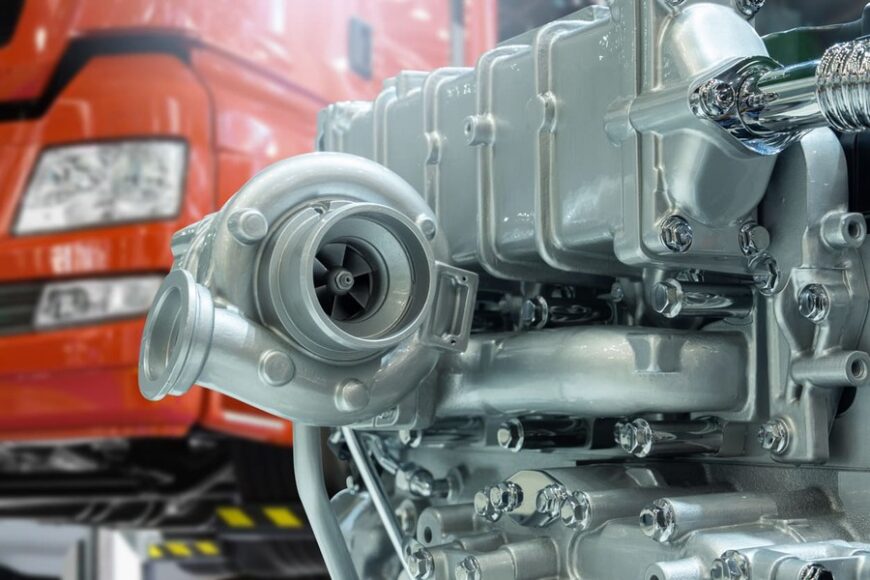
How do you know if a diesel turbocharger is failing?
Possible signs of a failing diesel turbo include loss of power, slow boost response, unusual whistling or grinding noises, increased exhaust smoke, and higher oil consumption. However, boost leaks, restricted air filters, damaged hoses, lubrication problems, and other engine faults can create very similar symptoms. For that reason, the turbocharger should be tested as part of the complete engine and intake system before it is replaced. Park Muffler provides diesel engine diagnosis and repair for Edmonton and Sherwood Park drivers.
A turbocharger helps a diesel engine produce more power by forcing additional air into the engine. When the turbo or a related intake, lubrication, or boost-control component develops a problem, the change in performance can be difficult to miss.
Power loss, unusual noises, smoke, and boost problems can all point toward the turbo system, but those symptoms do not automatically mean the turbocharger itself needs replacement.
What a Diesel Turbocharger Does
How does a turbocharger work on a diesel engine?
A turbocharger uses energy from the engine’s exhaust gases to drive a turbine.
That turbine is connected to a compressor on the intake side. As it spins, the compressor pushes more air into the engine.
More available air allows the engine to produce more power efficiently when the fuel and engine-management systems are operating correctly.
Because the turbo operates at very high speeds and temperatures, it depends heavily on:
- Proper oil supply
- Clean intake air
- Sealed intake and boost piping
- Correct exhaust flow
- Proper engine operation
A problem elsewhere in the engine can therefore affect turbo performance.
Why are turbo problems sometimes misdiagnosed?
Many symptoms associated with a bad turbo can also be caused by another system.
Cummins’ Holset turbocharger troubleshooting guidance notes that power loss, smoke, high fuel consumption, excessive temperature, noise, and oil leakage can be associated with turbo faults, but may also come from problems elsewhere in the engine.
Before replacing a turbocharger, technicians may need to inspect the intake, exhaust, lubrication, and fuel systems.
This can help avoid replacing an expensive component when the actual problem is a leaking hose or restricted air supply.
Common Signs of Diesel Turbo Problems
What does a failing diesel turbo sound like?
A healthy turbo may produce a normal whistle as it builds boost.
A new, unusually loud, or changing sound can indicate a problem.
Possible warning sounds include:
- Loud whining
- Siren-like noise
- Grinding
- Scraping
- Metallic contact sounds
- Whistling that suddenly becomes much louder
A loud whistle can also come from a boost leak rather than the turbocharger itself.
For example, a split hose or loose connection can allow pressurized air to escape and create a noticeable sound under acceleration.
If the sound is accompanied by power loss, smoke, or oil consumption, the vehicle should be inspected.
Can turbo problems cause smoke or loss of power?
Yes.
A turbocharger that cannot provide the expected boost pressure can leave the engine with less air than it needs under load.
You may notice:
- Weak acceleration
- Reduced towing performance
- Slow boost response
- Difficulty maintaining power
- Black exhaust smoke
Black smoke can occur when there is not enough air available for the amount of fuel being delivered.
Blue or bluish smoke may indicate oil entering the intake or exhaust, although there are several possible sources of oil consumption besides the turbo.
Because smoke colour alone cannot confirm the failed component, diagnosis should look at the complete engine system.
Can a failing turbo cause high oil consumption?
It can.
Turbochargers rely on engine oil for lubrication.
If internal seals or bearings become damaged, oil may enter areas where it should not be.
Possible symptoms can include:
- Increased oil consumption
- Blue exhaust smoke
- Oil in intake piping
- Oil around turbo connections
However, some oil residue within intake systems can occur for other reasons, so the presence of oil does not automatically prove the turbo has failed.
The amount, location, and other symptoms should all be considered.
Boost Problems and Performance
Why is my diesel suddenly not making boost?
A lack of boost does not always mean the turbocharger itself has failed.
Possible causes include:
- Split or loose intercooler hoses
- Intake restrictions
- Boost leaks
- Faulty actuators
- Wastegate problems
- Sensor faults
- Exhaust restrictions
- Turbocharger damage
This is one reason diesel diagnosis is important before replacing parts.
A boost-pressure test and inspection of hoses, connections, sensors, and the turbo itself can narrow down the cause.
Park Muffler provides diesel diagnostics and repairs for power loss and other diesel performance issues.
Can a dirty air filter affect turbo performance?
Yes.
A turbocharger needs a reliable supply of clean air.
A severely restricted air filter can limit intake airflow and affect engine and turbo performance.
Cummins’ turbo troubleshooting guidance specifically includes restricted air-cleaner and intake conditions among issues that can produce symptoms commonly associated with turbo problems.
Routine filter replacement is therefore part of protecting the turbocharger as well as the engine.
Repairing a Diesel Turbocharger
Can a diesel turbocharger be repaired?
It depends on the type and extent of the damage.
Some problems that appear to be turbo failures may be repaired without replacing the turbo at all.
For example, the actual issue may be:
- A leaking boost hose
- Loose connection
- Faulty actuator
- Intake restriction
- Oil-supply problem
If the turbocharger has internal bearing, shaft, compressor, or turbine damage, rebuilding or replacement may be required depending on the unit and vehicle.
A technician should also identify why the failure occurred.
Replacing a damaged turbo without correcting an oil-supply, contamination, or engine problem could lead to another failure.
Should you keep driving with a bad turbo?
Continuing to drive is not recommended if the turbo is making severe mechanical noises, the engine is producing heavy smoke, oil consumption has increased suddenly, or power has dropped significantly.
A failing component can sometimes cause additional engine or exhaust-system damage.
Arrange an inspection if you notice:
- Sudden major power loss
- Heavy black or blue smoke
- Grinding or scraping sounds
- Rapid oil loss
- Significant boost loss
- Warning lights or engine faults
Diesel Turbo Repair in Edmonton and Sherwood Park
Turbo symptoms should be diagnosed rather than assumed.
A leaking boost hose can create similar symptoms to a failing turbocharger, while an actual turbo failure may be connected to another engine problem that also requires repair.
Park Muffler provides diesel engine repair and diagnosis, complete automotive diagnostics, and Edmonton-area auto repair for diesel vehicles in Sherwood Park and surrounding communities.
Proudly Canadian owned and operated

© Park Muffler - All Rights Reserved.